
Traditional Latvian Pirts (sauna)
Across the Baltics, the relationship between people and the land lives on through the traditions, songs, celebrations, crafts, and healing practices passed down through generations. I am from Latvia, where the traditional sauna, known as pirts - a form of traditional healing - is a part of this living heritage and was once considered the most sacred space on one's land.
the four elements steam communion with plants shared presence

Usually situated beside water, pirts was a place for the weekly rhythms of washing and gathering, but also where myth and mystery were invited to share presence for life's great thresholds. Childbirth took place there, couples were prepared for marriage, and the bodies of those who had died were washed before being returned to the earth. It was a place where the human and more-than-human worlds met, where people came into relationship with the elements, the plants, their ancestors, and the forces that accompanied them through life. This understanding of pirts continues to shape the way I practise today.
When I first encountered pirts in its full capacity, I recognised a practice that is deeply relational, rooted in the land and in generations of local folk knowledge. Pirts came into my life as a way to commune with nature, the elements, and other beings, unmasked, stripped of layers.
The setting
The pirts is a warm, humid, and relatively gentle environment, traditionally kept between 60 and 80°C. Through gentle heat, steam, water, touch, breath and rest, the body is given space to settle, and what we have been carrying can begin to loosen.
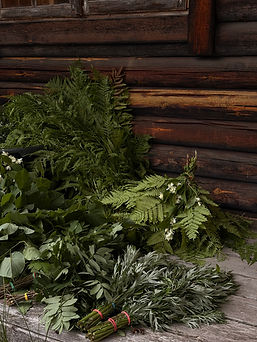
Plants are an essential part of this work. Birch, linden, oak, juniper, spruce, mugwort and wormwood are among those traditionally used, each bringing its own scent, texture and character. Their branches are gathered into whisks and used in a practice known as 'whisking', gently working the body with the leaves, warmth and steam.
The plants become companions in the process, engaging the senses and inviting a deeper relationship with the body, the steam, and their unique spirit. It is believed that each plant or tree has its own energy and spirit, each uniquely helping to pass through inner thresholds. Pirts, in many ways, is a setting where the plants guide the hands of the practitioner. They quietly whisper which part of the body and person's spirit needs the most attention. The receiver may feel that the nature of the whisk's tapping is suggestive and guides a metaphorical journey of understanding oneself better and releasing what is stagnant.

My journey and offerings
My own practice grew from studying these traditions in Latvia. I became a student at Lielzemenes, a Latvian school dedicated to the preservation and teaching of the pirts tradition, where traditional folk knowledge was taught alongside herbalism, physiology, and psychology.
We learned native folk songs and charms, worked with plants, and were encouraged to approach the wisdom of the land as something intimate and alive. I now share pirts through intimate one-to-one sessions and small groups, mainly in the UK.
Each session is an invitation to slow down and receive: to be held by warmth, water, plants and attentive care, and to reconnect with the body, the natural world and whatever in you is ready to soften, release or renew. For me, pirts is a practice of care, an old way of tending to the body and spirit that remains relevant today.